- Ananth Residency, Sadashiv Nagar, Belagavi, Karnataka 590019
- Get Location
- +91 8904178867
- 383rohan@gmail.com

 Advanced Orthopaedic, Joint Replacement & Spine Care Center
Spine Care – Dr. Rohan
Periprosthetic Fracture Management
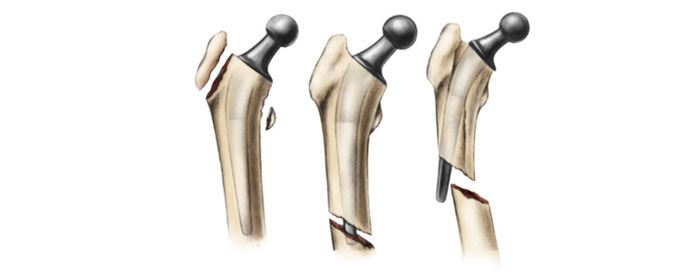
Periprosthetic Fracture Management involves the treatment of fractures that occur around a previously implanted joint prosthesis, most commonly after hip or knee replacement surgery. These fractures usually occur due to trauma, falls, osteoporosis, or implant loosening. Management is complex and requires careful assessment of the fracture pattern, implant stability, and bone quality. The primary goals are to stabilize the fracture, preserve or revise the prosthesis if necessary, restore limb alignment, and enable early mobilization to prevent complications.
Causes & Risk Factors
Periprosthetic fractures may occur due to minor falls in elderly patients with weak bone quality, high-energy trauma, implant loosening, or stress around the prosthesis over time. Osteoporosis, previous revision surgeries, and long-standing implants increase the risk. Early identification and appropriate planning are essential for successful outcomes.
Key Principles of Management
- Detailed Clinical & Radiological Evaluation: X-rays and CT scans are performed to assess fracture type, implant stability, and bone stock. Proper classification systems help guide the treatment plan.
- Assessment of Implant Stability: Determining whether the prosthesis is stable or loose is critical. Stable implants may allow fixation alone, while loose implants often require revision surgery.
- Surgical Fixation Techniques: Fractures around a stable implant are commonly treated with plates, screws, or specialized fixation systems designed to work around prosthetic components.
- Revision Arthroplasty: If the implant is loose or damaged, revision joint replacement with longer stems or specialized implants may be necessary to restore stability.
- Early Mobilization & Rehabilitation: Post-operative rehabilitation focuses on restoring mobility, preventing stiffness, and reducing complications such as blood clots or muscle weakness.
Recovery & Outcomes
Successful management depends on accurate diagnosis, surgical expertise, and structured rehabilitation. With modern fixation techniques and advanced implant designs, most patients can regain functional mobility and return to daily activities with improved stability and reduced pain.