- Ananth Residency, Sadashiv Nagar, Belagavi, Karnataka 590019
- Get Location
- +91 8904178867
- 383rohan@gmail.com

 Advanced Orthopaedic, Joint Replacement & Spine Care Center
Joint Replacement – Dr. Pooja
ACL Reconstruction
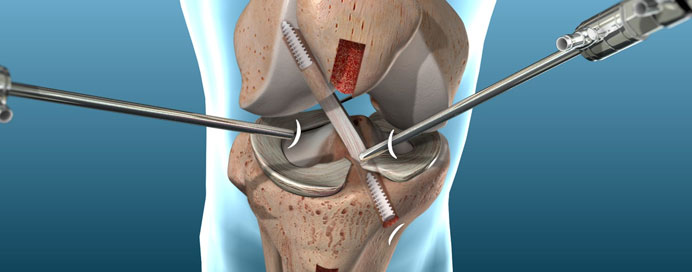
ACL Reconstruction is a surgical procedure performed to restore stability to the knee after a tear of the Anterior Cruciate Ligament (ACL). The ACL is one of the key ligaments that helps control knee movement and prevents the shin bone from sliding forward. ACL injuries commonly occur during sports activities involving sudden twisting, pivoting, or direct impact. When the ligament is completely torn and the knee feels unstable, reconstruction surgery is recommended. The procedure involves replacing the damaged ligament with a graft taken from the patient (autograft) or a donor (allograft), allowing the knee to regain strength, stability, and function.
Key Aspects of ACL Reconstruction
- Arthroscopic Minimally Invasive Technique: ACL reconstruction is usually performed using arthroscopy through small incisions, which reduces pain, minimizes scarring, and allows faster recovery compared to open surgery.
- Graft Selection: The torn ACL is replaced with a tendon graft, commonly taken from the hamstring tendon, patellar tendon, or quadriceps tendon. The choice of graft depends on patient factors and surgeon preference.
- Restoration of Knee Stability: The main goal of surgery is to restore normal knee stability, especially during sports and high-demand activities, preventing repeated episodes of giving way.
- Structured Rehabilitation Program: Post-operative physiotherapy is crucial for regaining strength, range of motion, and confidence in knee function. Rehabilitation typically continues for several months.
- Return to Sports & Activities: With proper recovery and adherence to rehabilitation protocols, most patients can return to sports and physically demanding activities within 6–9 months after surgery.